Closed Loop Measurement
Everyone Was Chasing
Since the dawn of the data revolution the organizations who were able to harness data most effectively were those that operated in a closed loop. This meant that they could directly measure the impact of advertising on the purchase actions of their targets. This was prevalent in ecommerce where you could tie site behaviors to digital and social ad exposure.
This lead to a lot of brick and mortar business trying to adopt a similar model where they would effectively integrate the user behavior data on their websites, with their ad tracking UTMs. The issue for many of these companies was that their websites weren't
part of a standard path to purchase.

The Balance of Advertising
Was Starting to Shift
In 2016 I was helping establish the Marketing Science practice at OMD in Canada. The goal was to adopt a more data driven approach to media buying and establish a practice that could provide consistent data driven insights. OMD boasted some of the most well known companies on the planet as their clients, and my primary focus in this period was on McDonald’s.
McDonald’s Canada had traditionally spent large sums of money in the traditional TV, Radio, and OOH space. But McDonald’s Global was starting to mandate that more money be spent in digital, as it was seen as a more cost effective means to maintain mind share.

You Measure
Your are What
In my second week with the McDonald’s Canada client I attended my first digital performance meeting, and was surprised to see that they had fallen into the trap that so many other companies were following at this time. All of their digital advertising was being Optimized towards a Click. For those that don’t know what that means, essentially our digital buying was looking for people who would click on our websites and actively pursuing them at the expense of a wider distribution.
This was common for ecommerce, whereby the next action you would want someone to take is to come to your online store, but the behavior of visiting a product information website before having lunch is rare. This is even more true for an established entity like McDonald’s. In 2016 however McDonald’s Canada were spending $11.8 million a year trying to find these people.

A Quick Refocus
to Top of Mind
The ROI of their digital advertising was poor, and this was being used as evidence to suggest that digital advertising just didn’t work for McDonald’s Canada. We needed to change what we measured and optimized to within Digital Advertising. Our OOH, Radio, and TV ads were all simple reminders of McDonald’s that kept the McDonald’s brand at top of mind for their target customer. They weren’t asking you to learn more at a website, simply pushing the brand name.
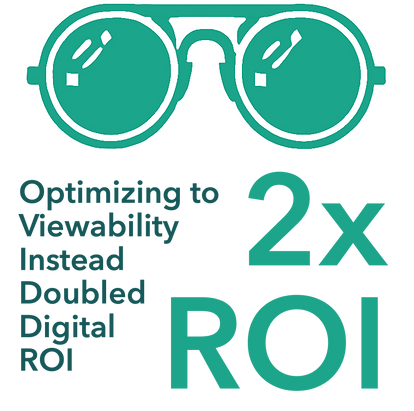
A closed loop would be coming, one that would allow us to identify ad interactions that produced a Store Visit, but we were still a year away and we needed change in digital quickly. It was at this point I implemented MOAT and started using visibility as the goal for Digital on McDonald’s. This was far from revolutionary but brought it in line with the other channels goals, and effectively doubled the ROI on digital advertising in a short period of time.
Meta Had a New
Tracking Ability
In 2016 we managed to turn digital around for McDonald's Canada, but the dream of closed loop measurement was still there. In 2017 that ambition was becoming a reality. Meta had long been respected as a means to hyper target, but as they added more and more ad placements to their platforms the question of how much impact those ads actually had was starting to come into question.
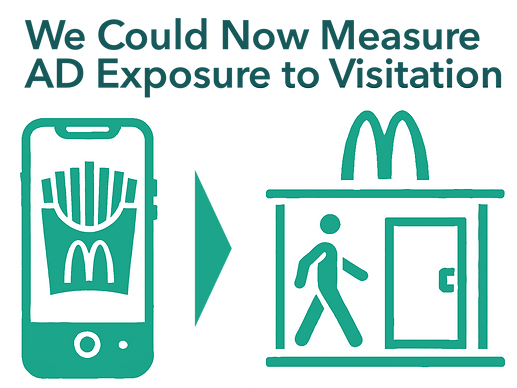
In 2017 they were looking for Beta test partners on their new Store Visits initiative. They were using the location settings on your mobile to understand where their platform users were visiting. By Geo Fencing locations we could understand whether someone who had been exposed to a McDonald’s Ad had subsequently visited McDonald’s location. This represented closed loop, where a direct measure of business could be attributed to advertising.
Avoiding the Impacts
of Goodheart's Law
One of the most common pitfalls in measurement is using your means of measurement as target. Goodheart’s law is an adage that states When a measure becomes a target, it ceases to be a good measure" We now had a means of understanding store visits to ad exposure so there was a lot of pressure at this time to start targeting more FB driven store visits.
The biggest issue we had was given, our lack of historic data, we had no way of knowing if the ad had inspired a visit or whether we had just served an ad to someone who was about to visit McDonald’s anyway. Optimizing towards it would be a sure fire way to ensure the latter.
Even as we expanded Store Visits into the larger digital buy with the help of the Weather Network (Yes they are tracking you too), it was important to ensure that we were using it to measure ad effectiveness not necessarily target our customers.

5x Digital ROI and the

Evolution of Owned Data
One of the most common pitfalls in measurement is using your means of measurement as target. Goodheart’s law is an adage that states When a measure becomes a target, it ceases to be a good measure" We now had a means of understanding store visits to ad exposure so there was a lot of pressure at this time to start targeting more FB driven store visits.
The biggest issue we had was given, our lack of historic data, we had no way of knowing if the ad had inspired a visit or whether we had just served an ad to someone who was about to visit McDonald’s anyway. Optimizing towards it would be a sure fire way to ensure the latter.
Even as we expanded Store Visits into the larger digital buy with the help of the Weather Network (Yes they are tracking you too), it was important to ensure that we were using it to measure ad effectiveness not necessarily target our customers.
Focusing on the Right Data
Led to Marketing Success
The impressive ROI results brought about by the changes I made to measurement and the subsequent refocus of our buy was impressive. What it show is that data driven marketing is not just about making
the numbers go up, it’s about defining a measurement strategy that
most closely correlates to an effective marketing strategy.
This was an example where the use of new measurement technologies could increase the efficiency and effectiveness of our advertising 5 fold. What it required was not leveraging the data that we already had, but implementing the means to give us the data that we needed.